
Redesigning Awager’s core product experience from the ground up, combining a scalable white-label design system with a simplified multi-market casino lobby built for faster discovery, clearer navigation and rapid operator customization.
Context
When I joined Awager, the company was developing what was effectively its next-generation product. A legacy platform was already live in Quebec, but the new experience was still pre-launch and consisted primarily of a proof of concept, a small number of Live Slots and a lobby designed by an external agency.
I joined as one of the earliest members of the product team and became the sole Product Designer for a significant period, owning the complete UI/UX direction of the new lobby and its supporting design system.
The existing foundation provided an initial visual language, but it had not been built for the scale, flexibility or white-label requirements of a growing B2B gaming platform. My role was to turn that early proof of concept into a coherent, reusable product experience that could support multiple operators, markets and future features.
Details
Company:
Awager
Time Frame:
Oct 23 – Ongoing
Role:
Lead Product Designer
Involvement:
Product Design, IA, Design Systems
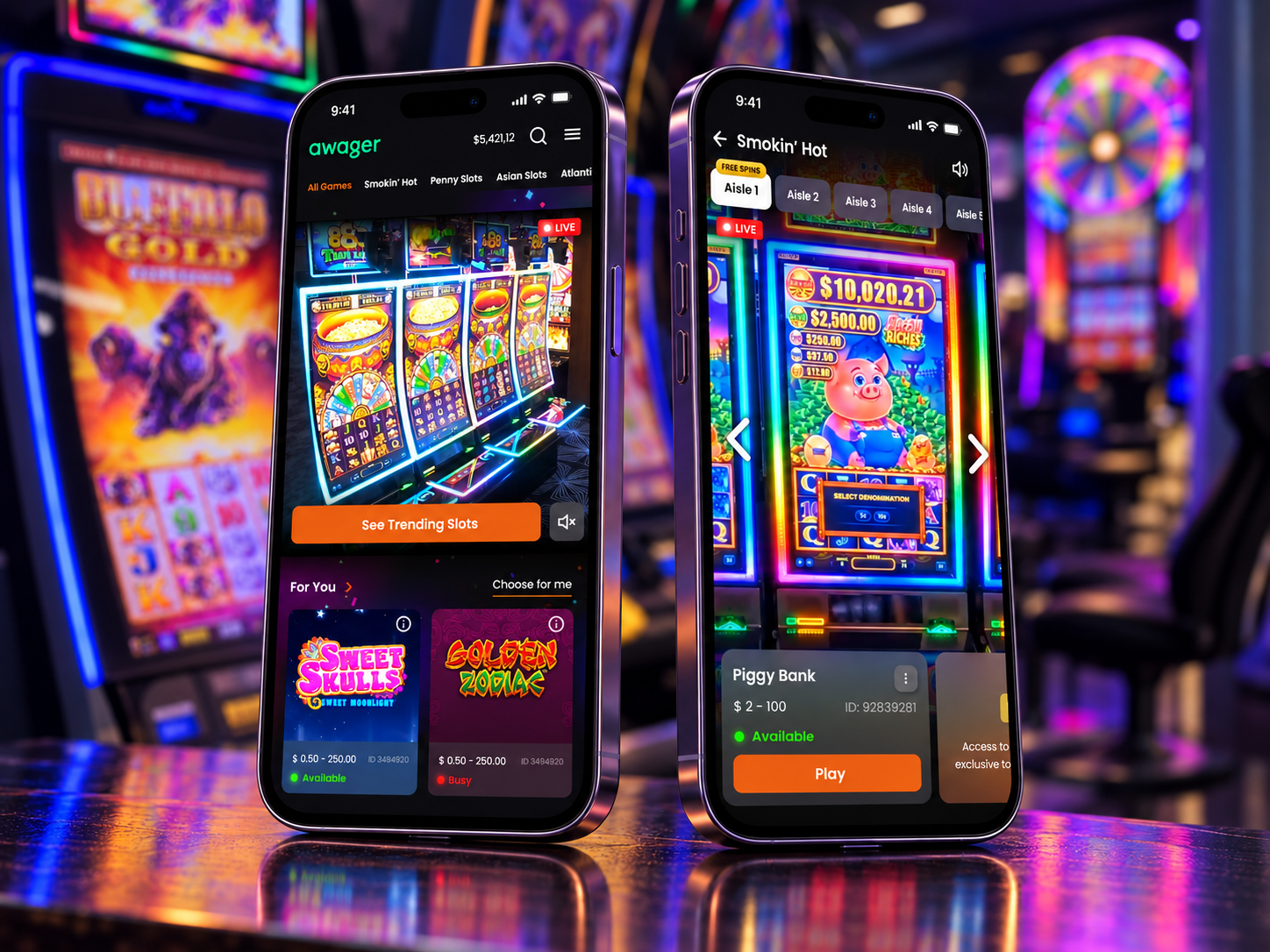
Overview
The Awager lobby serves as the primary discovery and navigation layer between players and a portfolio of remotely accessible physical slot machines.
The product combines the familiarity of online casino browsing with the immersive characteristics of live gaming, allowing users to discover games through categories, live casino views, machine availability and personalized content.
The redesign focused on creating a single coherent experience across the lobby rather than separating discovery into independent presentation modes. The resulting architecture brings together traditional game browsing, live machine exploration, search, queues, favorites and game access within a shared product language.
At the same time, the interface needed to support different regulatory environments and player expectations across the US and European markets.
Challenge
The inherited proof of concept presented two interconnected problems: a fragmented user experience and a design system that could not scale with the product.
The original lobby organized major functionality through separate navigation modes, including a classic live-oriented lobby, Grid View, Casino Map, Favorites and Search. Several of these destinations represented different ways of browsing the same game inventory, requiring users to understand the product’s internal structure before they could navigate it comfortably.
As additional functionality was introduced, the experience increasingly behaved like a collection of disconnected flows rather than a single lobby.
The underlying component library created similar challenges. Although reusable elements existed, foundational styles, simple controls and complex product components were organized without a clear hierarchy. States and patterns were inconsistently documented, and white-label customization required manual changes across individual components.
Process
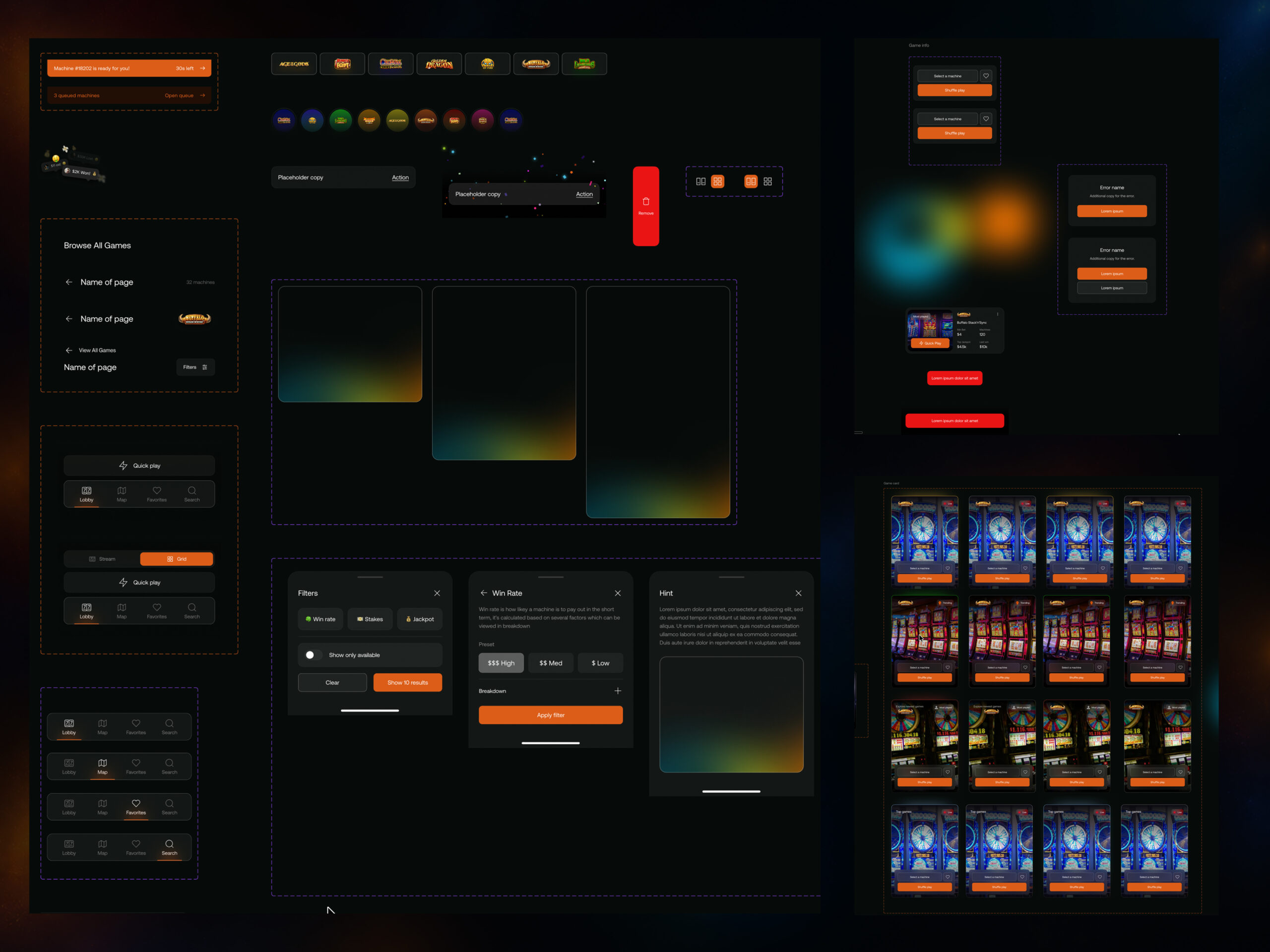
I began by auditing both the existing lobby experience and the inherited component library to identify recurring patterns, duplicated interactions and structural limitations.
For the lobby, I reviewed existing flows and worked with the CPO, Product Manager, Head of Engineering and frontend developers to redefine the information architecture around player intent rather than interface modes.
Moderated usability interviews and product analytics were used to understand how players discovered games, interpreted machine availability and navigated between live and traditional casino experiences. These findings also revealed meaningful behavioral differences between US and European users.
In parallel, I restructured the design system to align more closely with frontend component architecture, establishing clearer foundations for reusable patterns and responsive behavior.
Interactive prototypes were used throughout the process to evaluate navigation, discovery patterns and new features before implementation.
Rebuilding The Design System
The inherited Figma library contained useful visual foundations, but it lacked the structure required for a scalable product ecosystem.
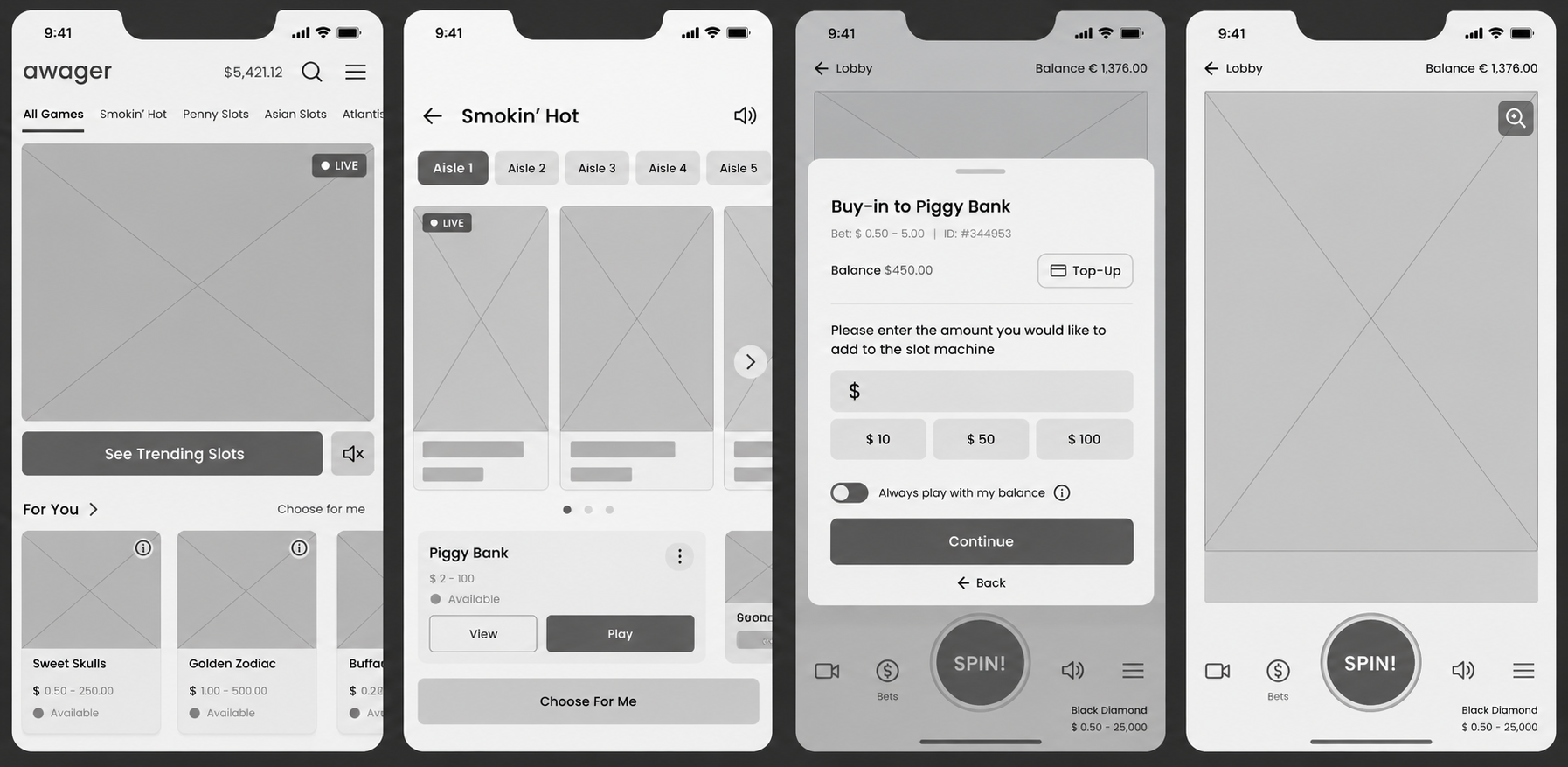
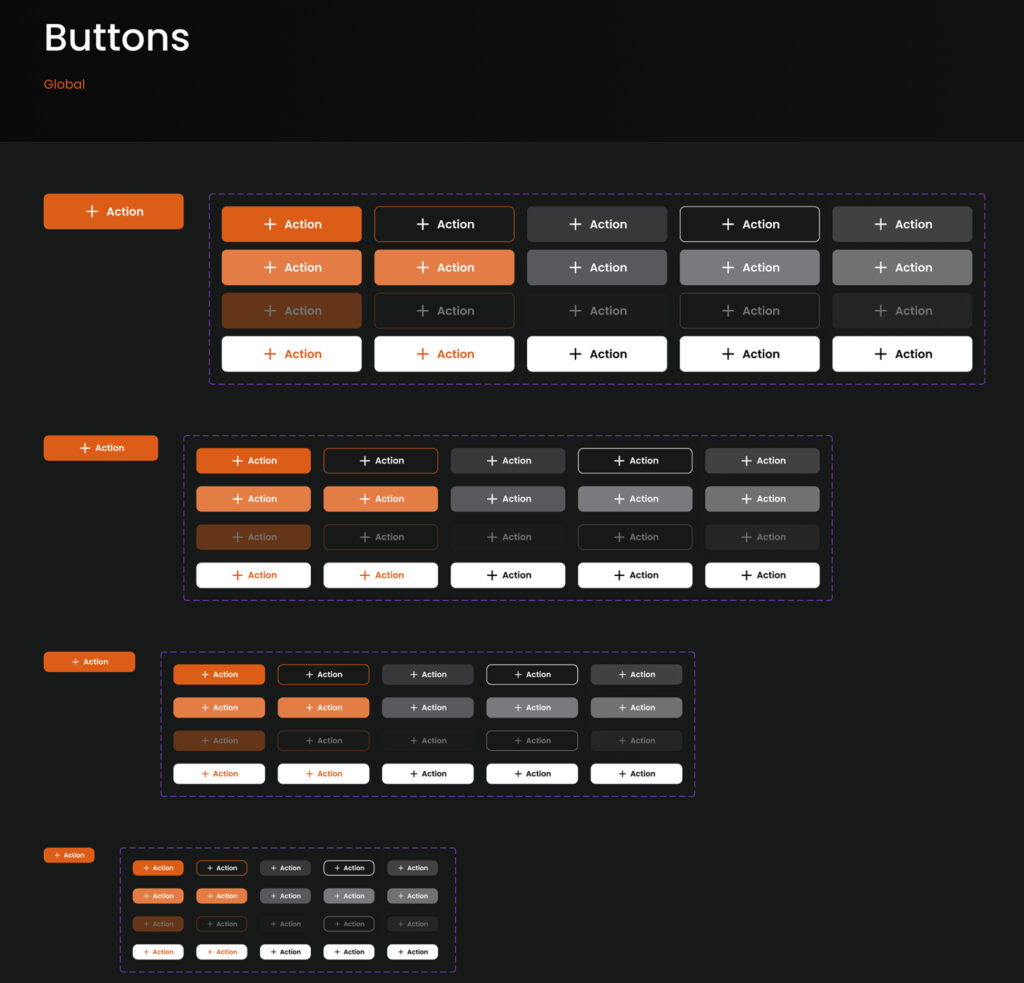
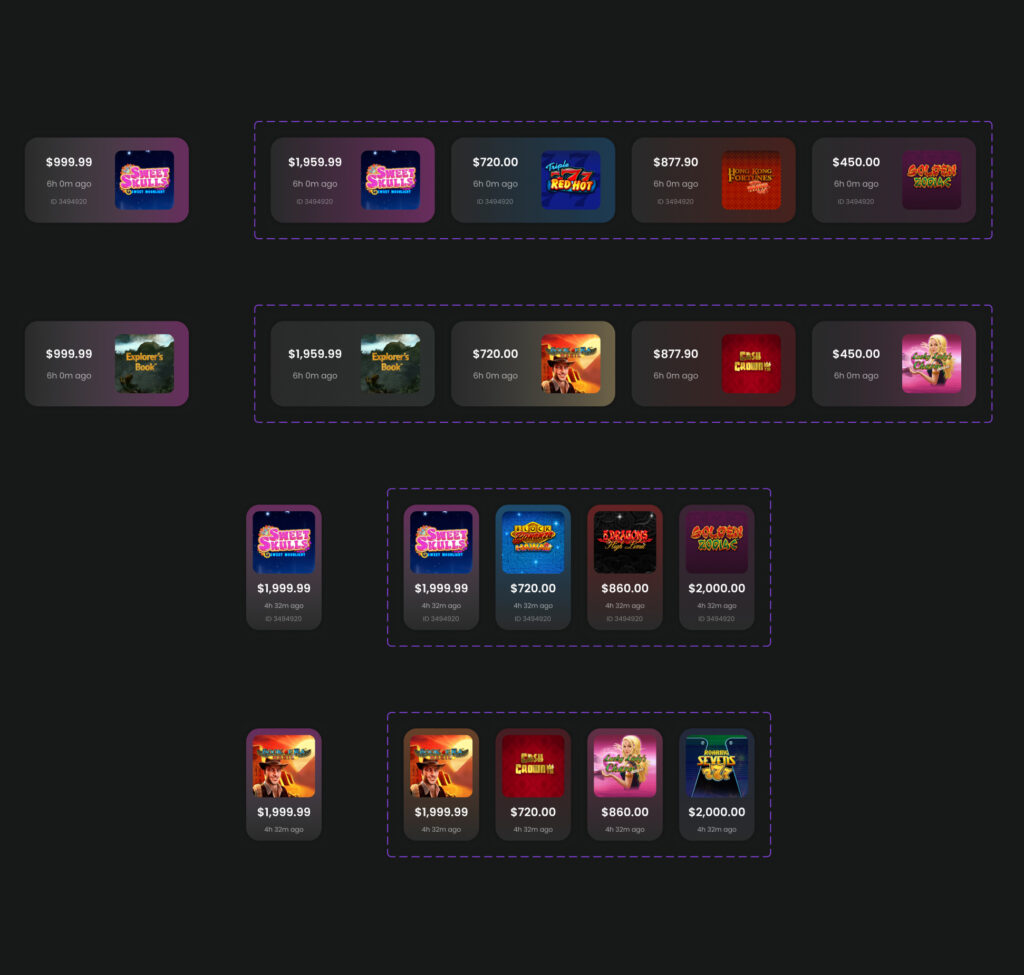
I reorganized the system around atomic design principles, separating the library into four clear levels: Styles, Atoms, Molecules and Organisms. Organisms were further structured across mobile portrait, landscape and desktop layouts to reflect the responsive architecture of the product.
Foundational styles covered typography, spacing, colors and reusable tokens, while components were documented with their states, variants and intended usage.
The system was designed to mirror frontend component logic, creating a clearer relationship between Figma and implementation. This reduced duplication, improved handoff and made it substantially easier to introduce new features without creating parallel design patterns.
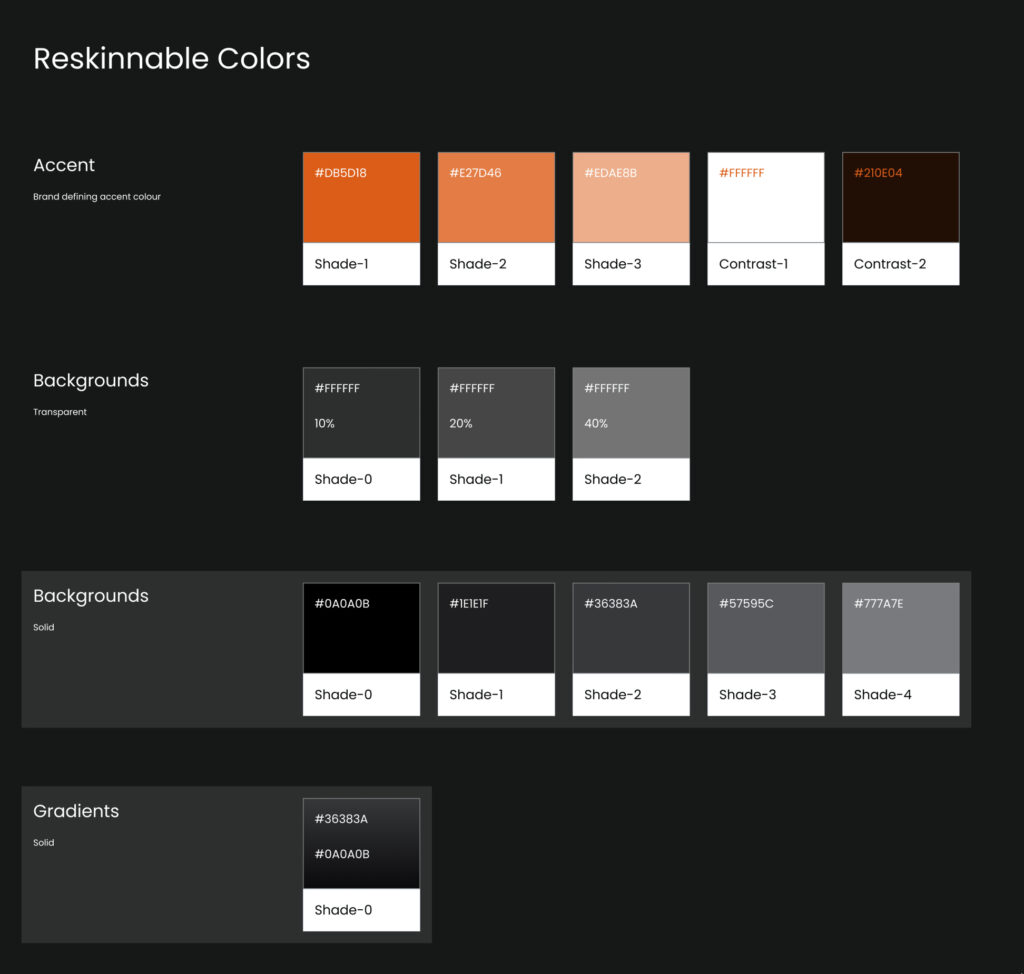
Most importantly, I rebuilt the system around variables and design tokens so that white-label customization could be handled centrally rather than by manually editing individual components.
A process that previously required roughly a week of design work could now be completed in approximately two minutes.
Solution
The redesigned lobby replaced the original mode-based navigation with a unified discovery experience.
Instead of asking players to choose between separate Classic and Grid views, the new architecture combines live casino exploration and familiar game-card browsing within the same product structure.
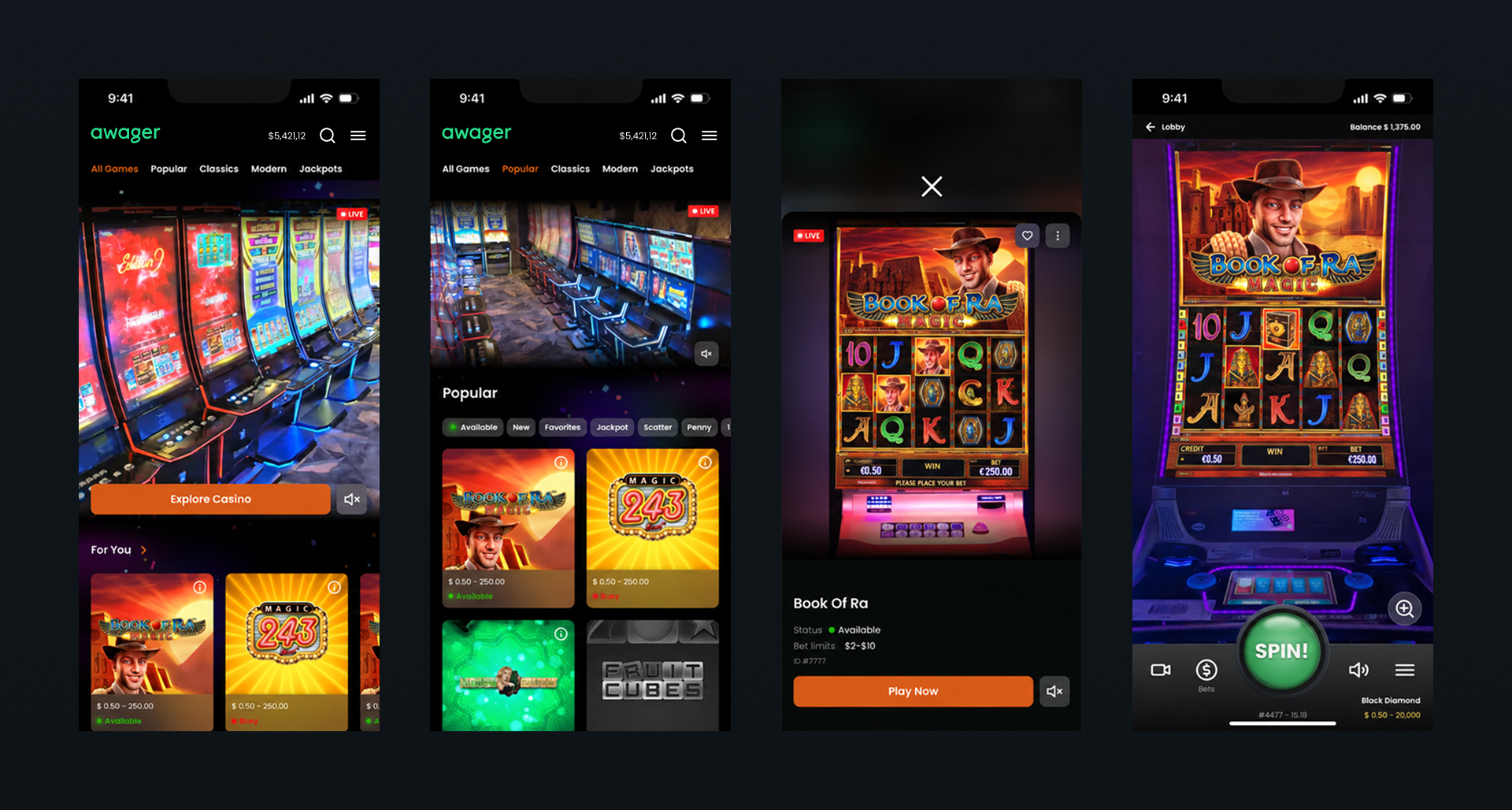
Categories became part of the primary browsing experience rather than separate destinations. Search was redesigned as a discovery surface, incorporating recent searches, recommended games, category suggestions and the same reusable game-card patterns used throughout the lobby.
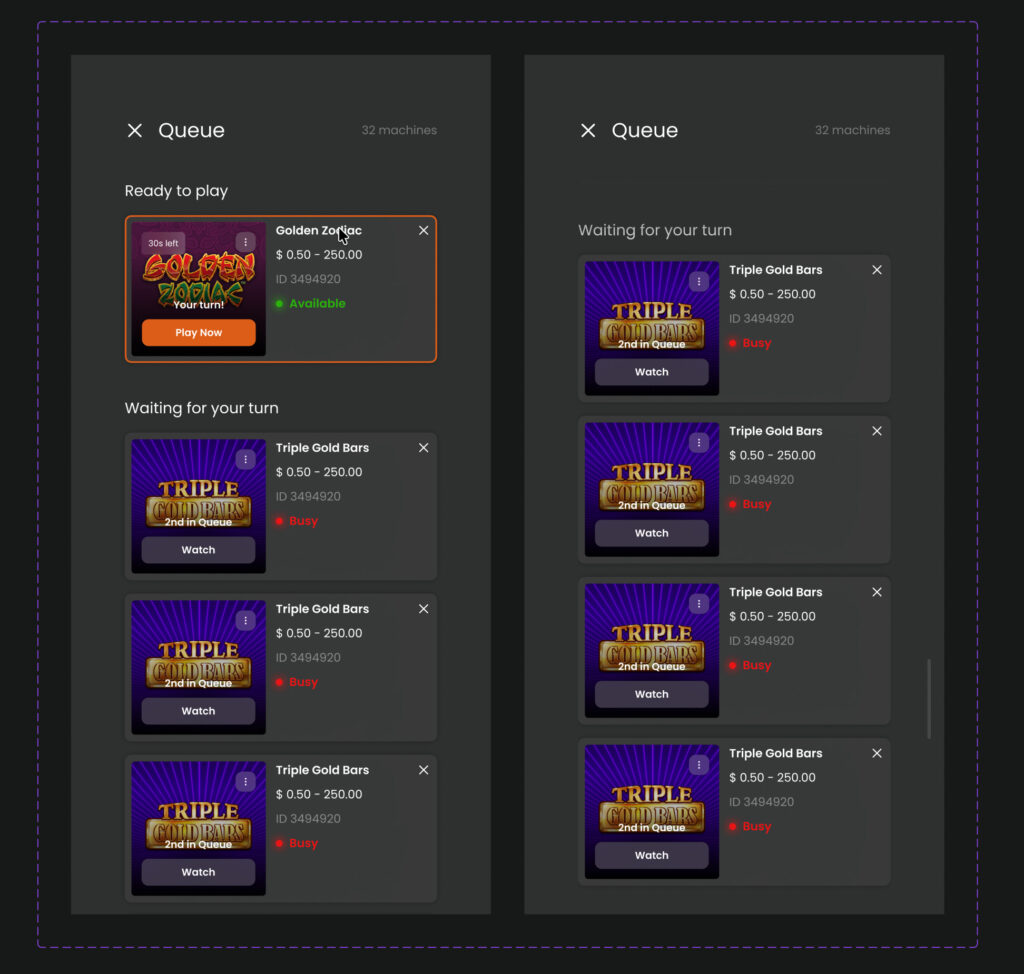
Secondary systems such as Favorites and Queue were integrated into the same architecture without competing with primary navigation. Queue states allow players to join unavailable machines, monitor their position and return to gameplay when a machine becomes available, while preserving continuity with the main lobby.
Game cards and detail drawers share consistent availability, status and access patterns across browsing, search and queue flows, creating a common interaction language throughout the product.
Casino Map and Aisle View were also repositioned as discovery tools within the wider lobby ecosystem rather than isolated navigation modes.
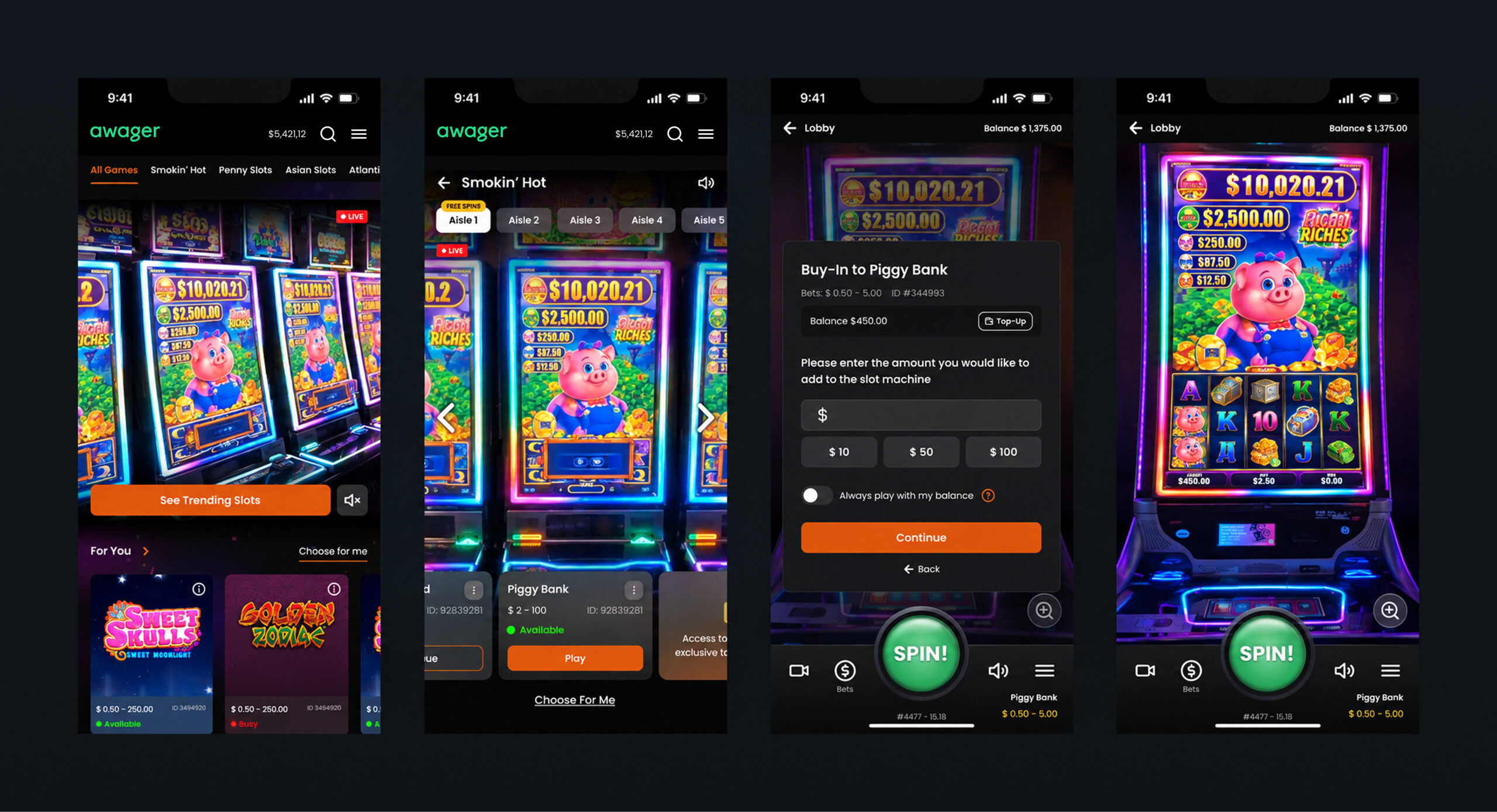
Designing Across Markets
The product architecture was designed as a shared foundation, but the final experiences were adapted for different markets rather than forcing a single global interaction model.
Usability testing showed that American and European players interacted with the product differently, while licensing requirements, available games and regulatory constraints also varied by region.
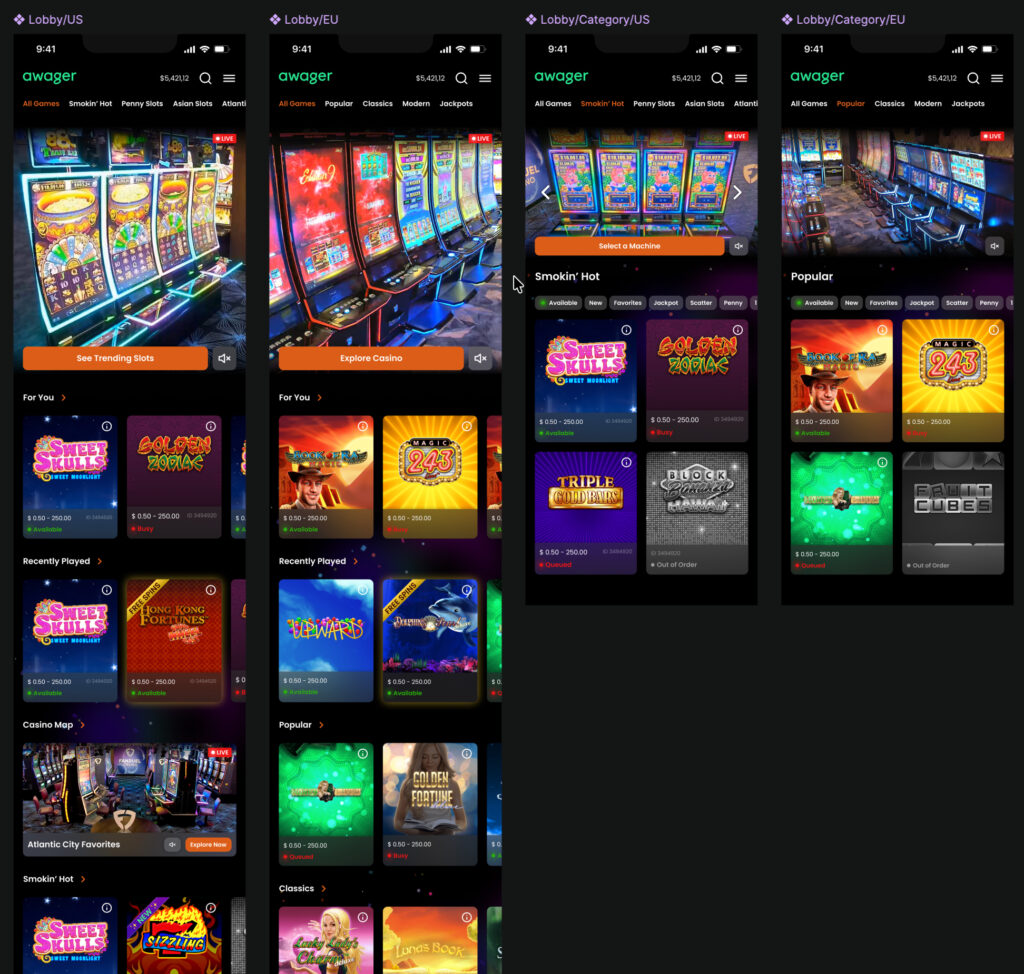
The US experience places greater emphasis on direct machine selection, aisle-based exploration and quicker routes into gameplay.
The European lobby gives more prominence to category-led discovery and Casino Map, allowing players to move between immersive exploration and more conventional online casino browsing.
Because both versions are built from the same underlying design system and interaction architecture, regional differences can be introduced without creating separate products or duplicating the design foundation.
Results
Awager’s next-generation lobby emerged from the redesign with a more scalable product foundation, combining a unified information architecture with a reusable, white-label-ready design system. The platform was subsequently adopted by major operators including BetMGM, FanDuel, Caesars and Loto-Québec, reinforcing the need for an experience that could adapt efficiently across brands, markets and regulatory environments.
Operator reskinning dropped from approximately one week of manual work to around two minutes through centralized variables and design tokens.
By aligning the Figma library more closely with frontend component architecture, implementation became faster, new designs were easier to integrate, and design and development could work from a clearer single source of truth.
Across deployments in the US, UK and Sweden, usability research and analytics continued to inform regional adaptations and ongoing iterations.
This foundation also made it easier to introduce later features such as Casino Map, aisle-based exploration, new discovery patterns and operator-specific experiences.
Overall, the work contributed to improved conversion while giving the product team a much faster and more scalable way to design, build and customize the platform.